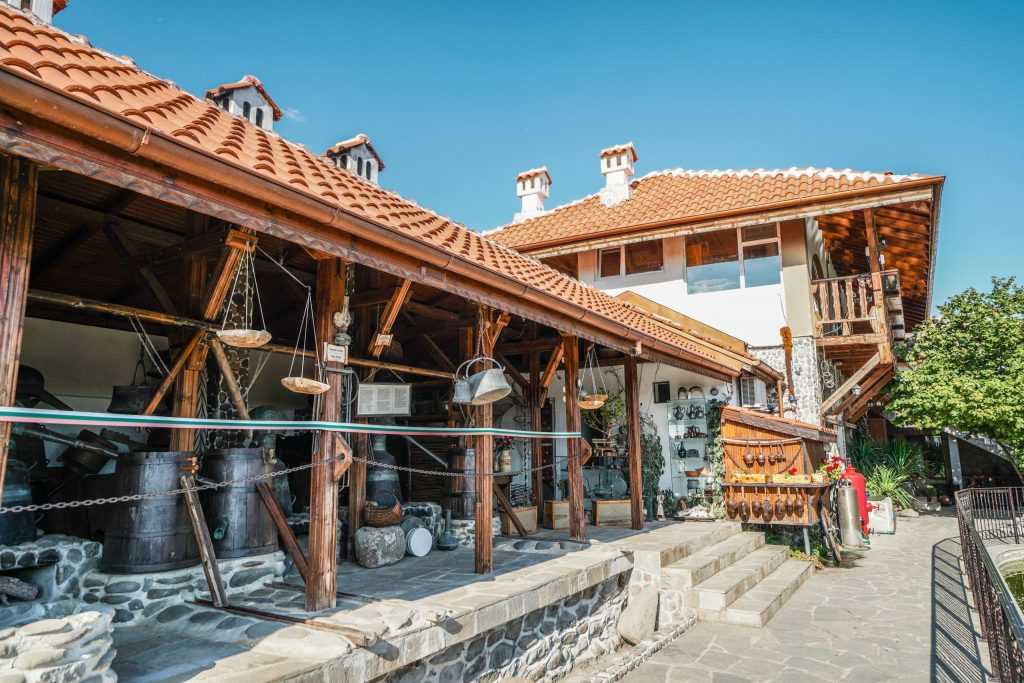
Damascene complex is located in the village. Skobelevo – in the very heart of the Rose Valley, between the "city of the Bulgarian rose" - Kazanlak and the city, famous for its mineral springs and balneotherapy - Pavel Banya. The complex shows its visitors various ethnographic elements, which combine the way of life, the tradition and culture of past generations.

Besides the unique monumental exposition of Thracian art, The first private rose brewery in Bulgaria and the Amphitheater, the visitor to the Damascene can also see the ethnographic corner, which shows objects, used in the daily lives of our ancestors before the Industrial Revolution.

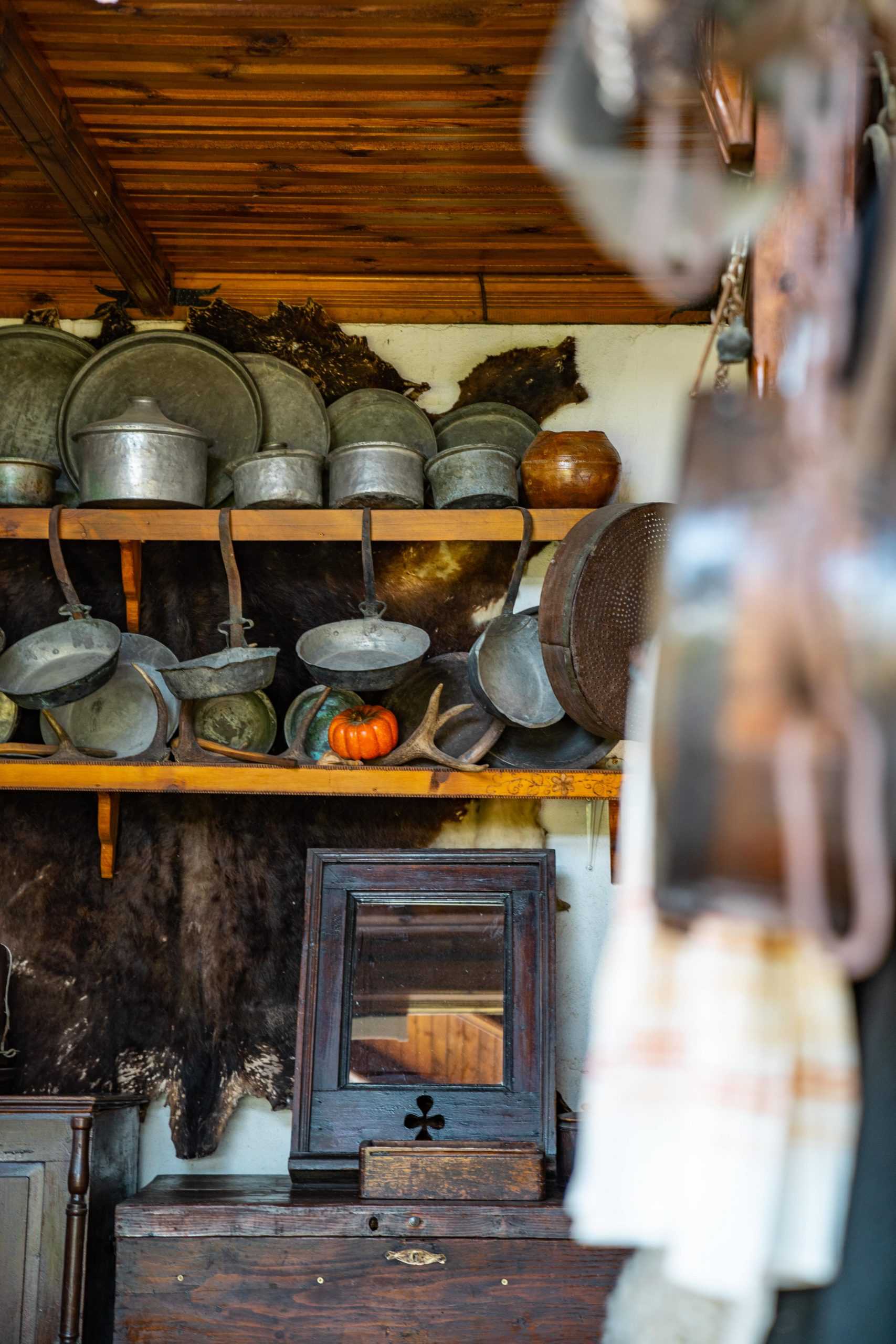
There you can see ancient looms, on which until recently our great-grandmothers wove linen paths. You can also see a unique collection of copper trays, in which traditional dishes were prepared and served. Last but not least, you will also see an old pot for boiling rose oil (Gulap cauldron). You will ask: "How they boiled rose oil in this pot?“. Experienced guides in Damascene Complex will tell you more about the technological process of roasting in the past and how the tradition has survived to this day..

During the dismantling in antiquity, the gulap cauldron was transported in close proximity to the rose fields and was placed on site, where there was running water. This water was used not only for the preparation of rose oil itself, and for cooling the vapor, which are released during the distillation process. After the just finished harvesting of roses, near 9:00 hours in the morning, the pickers immediately filled the pots with freshly picked flowers and boiled the rose in the field near the pink massifs.. That's why Gulap cauldrons aren't that big, as modern, because they had to be transported by carts near the pink massifs.

In ancient rosary, the fire that ignited and heated the cauldron was controlled, so that the freshly picked color relaxes the best oil. Our ancestors boiled rose oil in the field, because then they did not have cars or trucks, which today transport the pink color to the rosaries.

In the ethnographic corner of "Damascene", you can view and see unique objects from everyday life. For example, night or night - this is a wooden trough, which is made by hand from the trunk of a thick tree and in this wooden trough of time bread and Easter cake were kneaded. The bread, which is involved in the nights and when baked in an old wood oven is the most delicious bread, which one can try. At the time, people made bread for a whole week and stored the loaves of bread in a handmade meat – it is a woolen cloth for storing bread.

In the ethnographic exposition you will see many other objects, which have been used in the past and which will greatly impress you with their uniqueness, environmental friendliness and practicality.
In this corner the visitor can feel the spirit of the past.

It is important to know our past, to have our future,

and to feel all this and experience it, then visit the Ethnographic Complex "Damascene" and you will see for yourself.

EN / BG